ABOUT FLY TIE CATALOG
Fly Tie Catalog is a visual reference library for fly-tying patterns, materials and inspiration.
The goal of the site is simple: to collect interesting fly patterns in one place and present them in a consistent format that makes it easy to discover, compare and revisit flies for different species and fishing situations.
The catalog includes established classics, regional patterns, modern designs and variations of existing flies. Where the origin or creator of a pattern is known, this information is credited whenever possible. Fly patterns frequently evolve over time, however, and materials, proportions and tying techniques may differ between tiers. The flies shown here should therefore be viewed as representative versions rather than definitive tying instructions unless specifically stated otherwise.
Accuracy and attribution
Fly tying has a long tradition of patterns being modified, renamed and adapted as they move between anglers, regions and generations. Establishing the exact origin of a fly is therefore not always straightforward.
The purpose of the catalog is not to establish ownership of fly patterns, but to document, preserve and share fly-tying ideas while giving appropriate recognition to the people who developed them whenever possible.
If you notice an incorrect attribution, material description or other factual error, please get in touch so the catalog can be improved.
AI-generated fly renditions
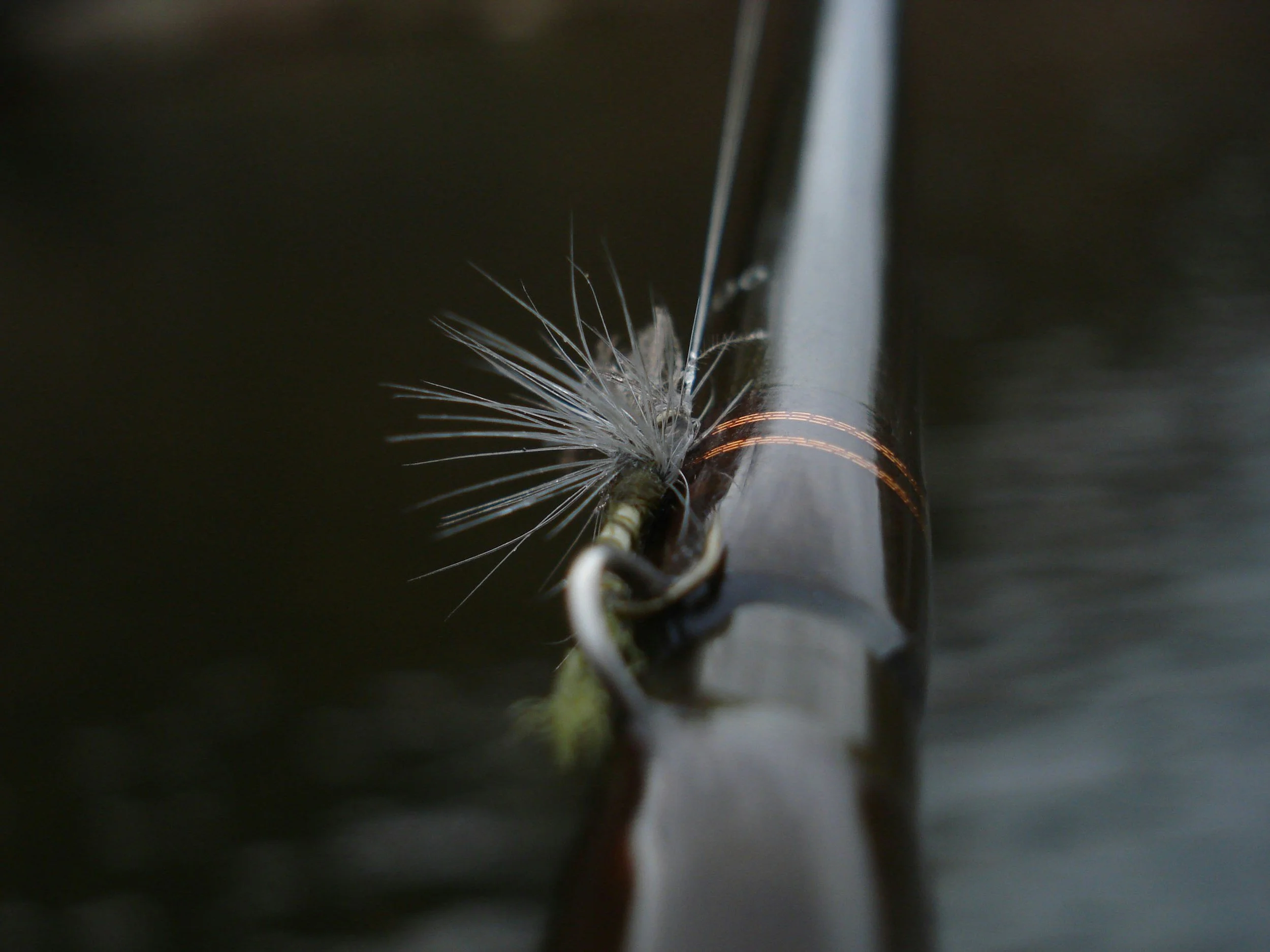
Many of the fly images used on Fly Tie Catalog are AI-generated visual renditions.
AI is used primarily to create a consistent photographic style across the catalog. These images are intended to show the general construction, materials, colors, proportions and character of a fly pattern.
When an existing photograph is used as a visual reference, the purpose is to identify the fly and understand its construction. The AI rendition is created independently rather than attempting to reproduce the exact physical fly or photograph.
Our general guidelines are:
AI images are illustrative renditions of fly patterns, not photographs of the original fly or a specific tied specimen.
Reference photographs are used to understand the pattern, materials and proportions rather than to duplicate a specific image.
AI renditions should preserve the recognizable characteristics of the fly while using independent fiber placement, hook geometry, lighting, pose and composition.
Small differences in materials, proportions, color or construction may occur and should not be interpreted as historically authoritative details.
AI-generated images are not presented as flies personally tied by the original pattern creator.
Whenever the creator or origin of a pattern can be established reliably, they are credited separately from the AI-generated illustration.
AI is used as a visualisation tool, not as evidence for the history, authorship or origin of a fly pattern.
In some cases, the catalog may also contain original photographs or photographs supplied with permission.